- 1-877-482-5522
 Store
Store
Language
简体
繁體
English

Telecom
Chinese TV
Security & Smart Home
Customer Service

'%3e%3crect%20width='19'%20height='19'%20fill='white'/%3e%3cpath%20d='M11.6406%2017.5703C9.7173%2016.9588%207.66403%2015.6461%205.54817%2013.4415C3.49597%2011.3031%202.21955%209.28207%201.56516%207.42572C1.13951%206.21901%201.03269%205.26742%201.09527%204.61509C1.09764%204.5879%201.10088%204.5608%201.10498%204.53382L1.11361%204.44931C1.12548%203.99236%201.38983%203.28513%201.67306%202.95411C1.94302%202.60414%202.23493%202.27156%202.54702%201.95839C2.79572%201.70919%203.03525%201.5009%203.25375%201.34804C3.57959%201.11983%203.78891%201.06224%203.8434%201.094C3.83801%201.09453%203.86984%201.12737%203.91515%201.18926C3.995%201.29745%204.09426%201.45461%204.21025%201.65375C4.48805%202.14355%204.74984%202.64221%204.9952%203.14895C5.50846%204.20058%206.00057%205.26236%206.47123%206.33365C6.51439%206.43053%206.49496%206.64421%206.43724%206.73033L5.24768%208.49195C5.2101%208.54982%205.18137%208.61294%205.16244%208.67925C4.97254%209.3332%205.47372%2010.3575%207.02959%2011.9393C7.978%2012.9027%208.80719%2013.5303%209.52039%2013.8839C9.99945%2014.1218%2010.362%2014.2069%2010.601%2014.2015C10.7143%2014.1966%2010.8098%2014.1649%2010.8923%2014.11L12.651%2012.9259C12.7416%2012.8651%2012.965%2012.8414%2013.0691%2012.8834L13.2892%2012.9711C14.0653%2013.2825%2014.8365%2013.6061%2015.6025%2013.9415C15.7806%2014.0201%2015.9516%2014.0965%2016.115%2014.1708C16.6653%2014.4222%2017.1174%2014.6444%2017.4459%2014.8264C17.6175%2014.9222%2017.7513%2015.0045%2017.8398%2015.0696C17.8759%2015.0966%2017.9013%2015.117%2017.9131%2015.1288C17.8876%2015.0999%2017.8686%2015.0657%2017.8576%2015.0287L17.8948%2015.1095C18.0092%2015.3129%2017.4686%2016.0713%2016.5909%2016.8431C16.4208%2016.9927%2016.2476%2017.1386%2016.0713%2017.2807C16.0133%2017.3236%2015.9646%2017.3778%2015.9279%2017.4399C15.8913%2017.502%2015.8675%2017.5708%2015.858%2017.6423C15.8485%2017.7137%2015.8535%2017.7863%2015.8727%2017.8558C15.8919%2017.9253%2015.9249%2017.9902%2015.9697%2018.0468C16.0145%2018.1033%2016.0702%2018.1503%2016.1336%2018.1849C16.1969%2018.2196%2016.2666%2018.2411%2016.3385%2018.2484C16.4103%2018.2557%2016.4829%2018.2485%2016.552%2018.2272C16.621%2018.2059%2016.685%2018.1711%2016.7403%2018.1246C16.9317%2017.9707%2017.1196%2017.8126%2017.3041%2017.6505C18.6312%2016.4825%2019.3439%2015.4841%2018.8351%2014.5815L18.8723%2014.6622C18.7197%2014.2424%2018.0561%2013.8732%2016.5634%2013.1923C16.3961%2013.1153%2016.2208%2013.0373%2016.039%2012.9571C15.1894%2012.583%2014.3327%2012.2252%2013.4694%2011.8839C13.0367%2011.7095%2012.4358%2011.7725%2012.0473%2012.0335L10.2886%2013.2176L10.5648%2013.1261C10.5794%2013.1256%2010.5508%2013.1223%2010.4893%2013.1078C10.3201%2013.0637%2010.1563%2013.0009%2010.0011%2012.9205C9.40224%2012.6234%208.66854%2012.0679%207.79998%2011.1852C6.49011%209.85421%206.14808%209.15451%206.19879%208.97905C6.18754%209.01543%206.17119%209.05004%206.15023%209.08185L7.33224%207.33153C7.59713%206.93862%207.65054%206.33419%207.45902%205.90038L7.35436%205.6641C6.97743%204.81602%206.5886%203.97325%206.188%203.13604C6.11139%202.97726%206.03694%202.82279%205.96357%202.67424C5.1797%201.08269%204.73679%200.320561%204.33973%200.139178C3.8612%20-0.142316%203.27101%200.0213058%202.63388%200.466959C2.35766%200.660183%202.07281%200.907769%201.78311%201.19787C1.44379%201.53836%201.12613%201.89968%200.832002%202.27971C0.40581%202.77704%200.0529871%203.72217%200.0351841%204.42186L0.043816%204.33736C0.0368028%204.37504%200.0287102%204.43317%200.0211574%204.51283C-0.0559888%205.31748%200.068632%206.42569%200.547694%207.7831C1.25442%209.78801%202.61284%2011.9393%204.76862%2014.1859C7.00639%2016.5175%209.21342%2017.9282%2011.3126%2018.5961C12.0155%2018.8195%2012.6753%2018.9481%2013.2844%2018.9987C13.4259%2019.0085%2013.5655%2018.9623%2013.6731%2018.8701C13.7807%2018.7779%2013.8476%2018.6472%2013.8593%2018.5062C13.871%2018.3652%2013.8266%2018.2252%2013.7356%2018.1167C13.6447%2018.0081%2013.5146%2017.9396%2013.3734%2017.926C12.7842%2017.8731%2012.2029%2017.7534%2011.6406%2017.5703Z'%20fill='%23575B66'/%3e%3c/g%3e%3cdefs%3e%3cclipPath%20id='clip0_678_602'%3e%3crect%20width='19'%20height='19'%20fill='white'/%3e%3c/clipPath%3e%3c/defs%3e%3c/svg%3e)


Telecom
Chinese TV
Security & Smart Home
Customer Service
Language
简体
繁體
English
[iTalkBB Movie] "The Eight Hundred": A Controversial Release – Does It Honor or Tarnish the History of the War of Resistance?
The highly anticipated war film "The Eight Hundred" had kept audiences on edge long before its release. Originally scheduled for July 2019, it was delayed multiple times and finally premiered in mainland China on August 14, 2020.
As the first major Chinese-language blockbuster released after the resumption of mainland China's film industry, "The Eight Hundred" saw soaring box office numbers. Within half a month of its release, it surpassed 2 billion yuan on August 31, becoming the 20th film in Chinese cinema history to cross this milestone. By September 26, it broke the 3 billion yuan mark, ranking as the 10th film in Chinese history to achieve this feat.

Behind its top-tier box office performance lies an equally top-tier production team.
Director Guan Hu, known for films like "Cow" (which earned Huang Bo the Golden Horse Award for Best Actor), "The Chef, the Actor, the Scoundrel," and "Mr. Six" (which won Feng Xiaogang the Golden Horse Award for Best Actor).
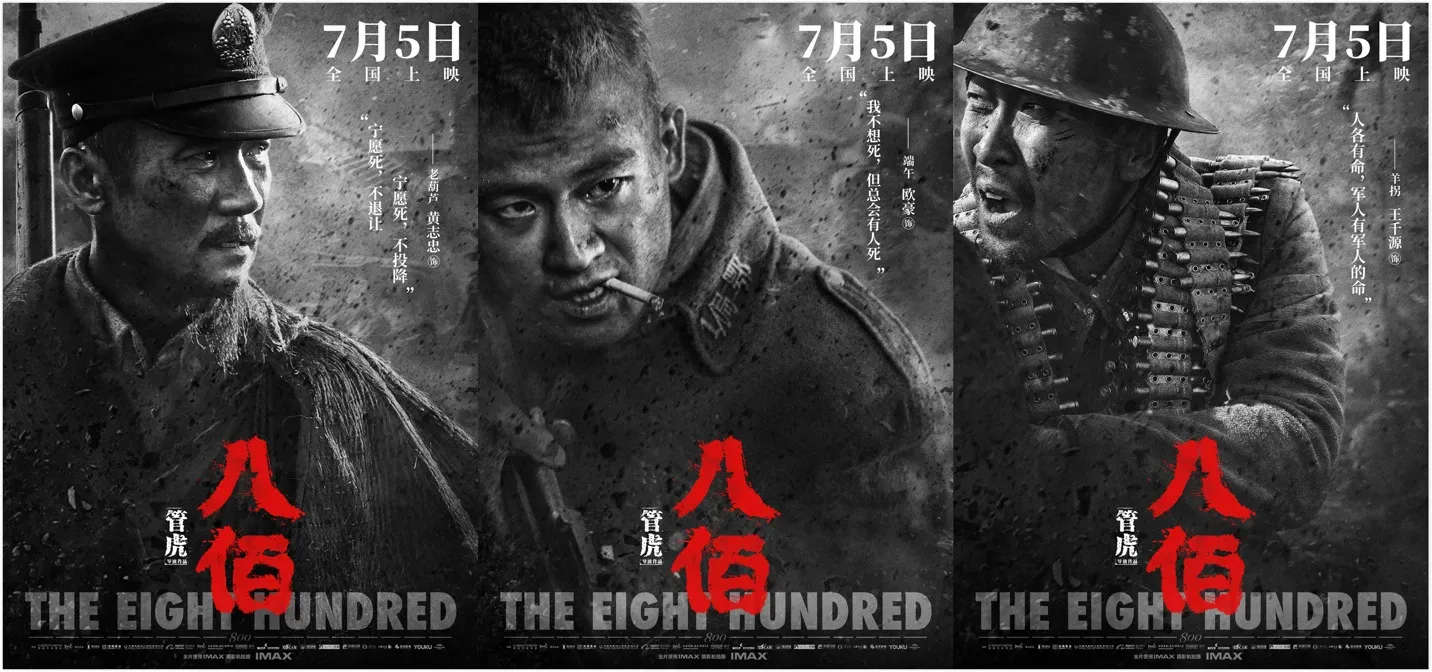
The cast of "The Eight Hundred" is equally impressive, featuring 7 award-winning actors and 3 award-winning actresses, including Wang Qianyuan, Jiang Wu, Zhang Yi, Yu Ailei, Hou Yong, Ethan Juan, Huang Xiaoming, Liu Xiaoqing, Liang Jing, and Yao Chen. Additionally, renowned actors like Huang Zhizhong, Zhang Junyi, Oho Ou, Zhang Cheng, Jiang Wu, Du Chun, Zhang Youhao, Wei Chen, Li Chen, Yu Ailei, Yu Haoming, and Zheng Kai joined the production.
From its subject matter to its star-studded lineup, "The Eight Hundred" attracted immense anticipation and praise, yet controversy has persistently followed the film.
Controversy Over Release Dates
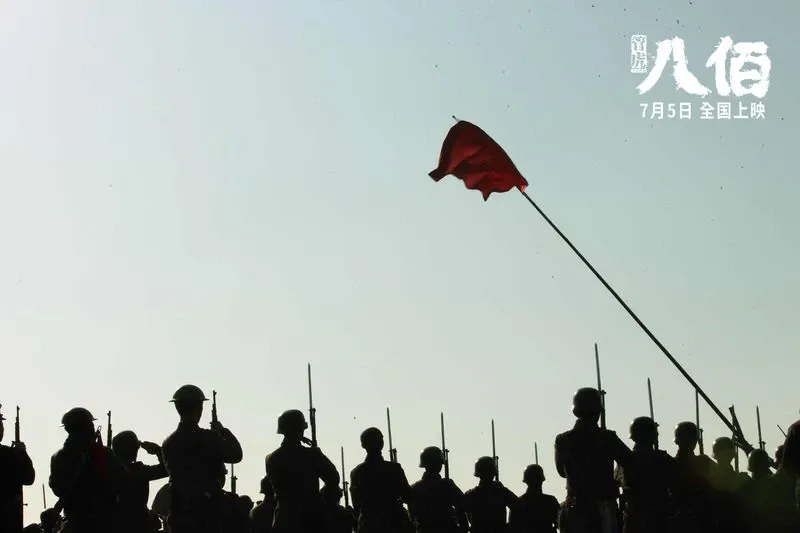
On June 3, 2019, the organizers of the Shanghai International Film Festival announced that "The Eight Hundred" would be the opening film, with its world premiere scheduled for June 15 after the Golden Goblet Awards ceremony. That year, the festival's theme was "Celebrating the New China, Striving for the New Era" in honor of the 70th anniversary of the People's Republic of China.
Prior to the festival premiere, the film had already obtained its public screening license, and production company Huayi Brothers was actively promoting it. However, on June 13, Huayi staff were notified to halt promotional activities. The next day, the studio announced the cancellation of the premiere due to "technical reasons."
Many speculated that the cancellation was politically motivated rather than technical. Subsequently, the film's release was postponed indefinitely.

On August 2, 2020, the studio announced a new release date: August 21. According to Huayi Brothers' screening notice to theaters, the final runtime was 147 minutes—13 minutes shorter than the 160-minute festival cut. Deleted scenes included detailed sequences of Yang Huimin smuggling the Republic of China flag, close-ups of soldiers raising the flag, and a subplot involving Ethan Juan's Taiwanese character (who was mistaken for a Japanese spy and lynched after cursing Japanese soldiers in their language). However, a distant shot of the flag-raising was retained.
After multiple delays, cancellations, and edits, "The Eight Hundred" was finally approved for release.
The Historical Truth
While the film's box office performance was stellar, audience reactions were polarized. Supporters praised its emotional portrayal of history and artistic merit, calling it a tribute to Chinese resilience. Critics, however, accused it of distorting facts, illogical storytelling, and manipulative melodrama that insulted the people. So, what is the real history? "The Eight Hundred" only tells half the story.

During the Battle of Shanghai in the Second Sino-Japanese War, 800,000 Chinese troops faced 300,000 Japanese soldiers from August to November 1937. By late October, Chinese forces were retreating. On October 26, to prevent encirclement, the National Revolutionary Army ordered a full withdrawal—except for one battalion left behind to defend Shanghai. Led by Lieutenant Colonel Xie Jinyuan, this group became known as the "Eight Hundred Heroes," though their actual number was 420.
Militarily, their stand was futile, but politically, Chiang Kai-shek hoped to garner international sympathy by showing China still held parts of Shanghai ahead of a League of Nations meeting.
The "Eight Hundred" defended the six-story Sihang Warehouse, surrounded on three sides by enemies and bordered by the Shanghai International Settlement to the south. This restricted Japanese forces from using airstrikes or artillery, lest they damage the foreign concessions.
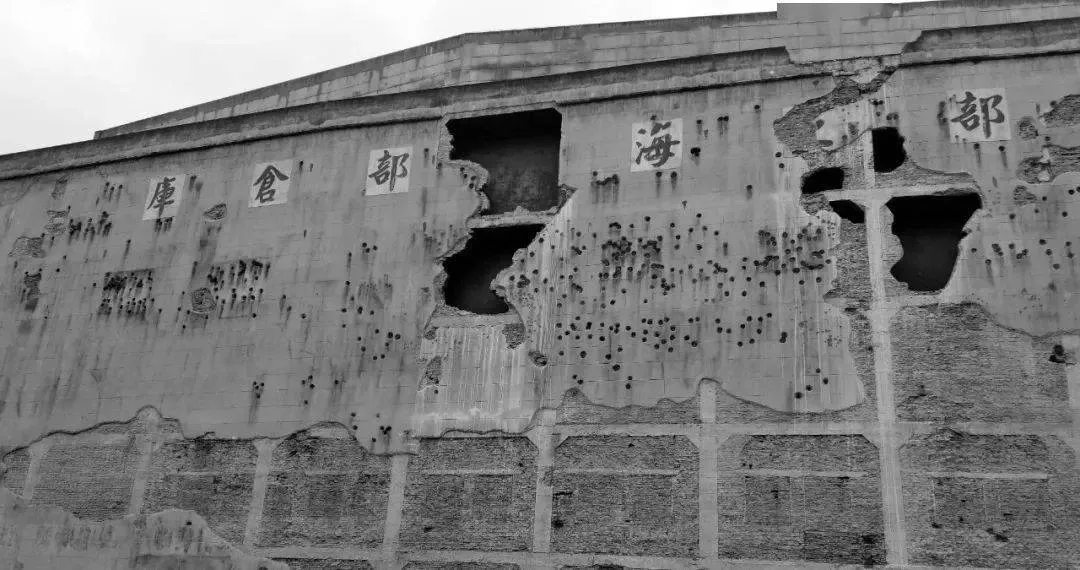
Xie Jinyuan's 420 men held out for four days, suffering 38 casualties while killing or wounding over 200 Japanese soldiers. On the fourth day, Xie received orders to retreat to the British concession with the remaining 382 men. This is the story depicted in the film.
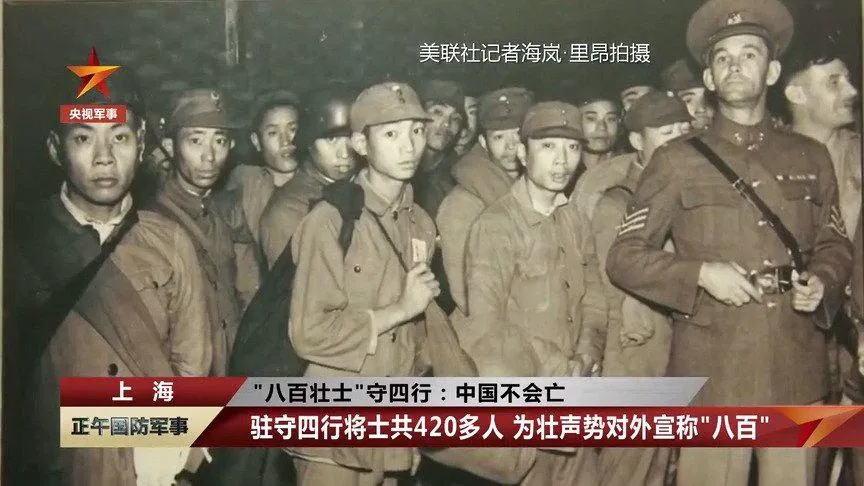
After Pearl Harbor, Japan invaded the British concession and captured the surviving defenders, most of whom were forced into labor camps in Southeast Asia. By 1945, fewer than 150 of the original 420 remained alive...

The film's popularity has revived interest in this chapter of history. Today, the Sihang Warehouse Memorial is a protected national heritage site.
Visitor numbers have surged, with some traveling long distances to pay respects to the fallen heroes.

iTalkBB Movie Pick — "The Eight Hundred". A thousand viewers may see a thousand different stories—experience it for yourself.
Open iTalkBB to watch the tale of the Eight Hundred Heroes, honor their sacrifice, and reflect on today's peace.


- iTalkBB Global

- About Us
- Contact Us
- Legal
Follow us


Terms and Conditions

Copyright © iTalkBB.com All rights reserved.
iTalkBB and iTalk are trademarks of iTalk Global Communications, Inc., registered in the U.S. and other countries.
Customer Service
1-877-482-5522
Follow us